When I look at the nativity sets that are displayed each year during Advent, I try to imagine the scene beyond the figurines. When Mary and Joseph were told there was no room at the inn, I imagine the innkeeper’s wife stepping in to greet the weary couple. I picture her coming around to Mary’s other side and helping her walk to the stable. I see her and the innkeeper gathering blankets, oil, and food to offer some comfort.
In my mind, the innkeeper’s wife stays with Mary and acts as a doula. She holds her hand and wipes the sweat from her brow, while she gives gentle reminders that each contraction is like a wave: intense but temporary. I like to imagine Mary sinking into her arms and relaxing into this wisdom as she finds strength in her presence. I imagine that she didn’t shy away from the messiness of labor but stayed close through the hardest moments, encouraging Mary when she felt ready to give up, until Jesus finally made his way into the world.
Of course, this is just what I like to think. We don’t know the specifics of Mary’s labor or the setting, but perhaps these nativity scenes really invite us to reflect not only on Jesus’ birth but on the process of labor itself – the struggle and surrender that brought him here. Although nativity scenes might not come with the innkeeper and his wife, they often feature animals that can draw our attention to creation’s role in this sacred story.
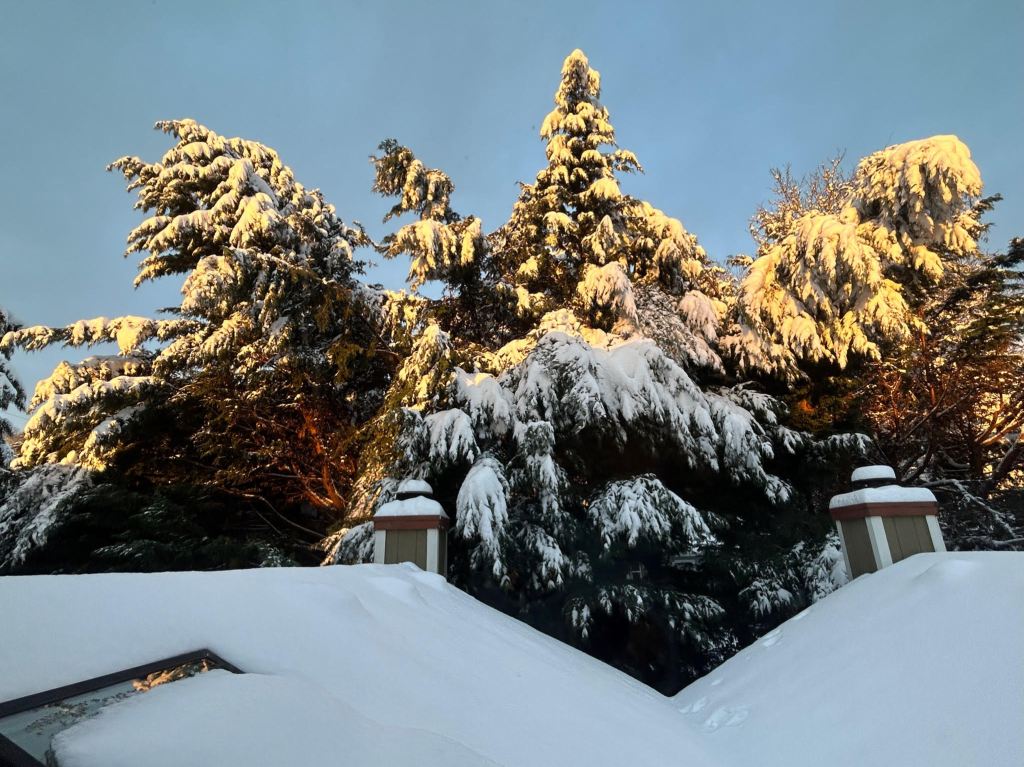
December 25 probably wasn’t the actual date of Jesus’ birth, and it probably wasn’t snowing in the Middle East. Still, it’s no coincidence that we celebrate Christmas near the Winter Solstice on December 21, the shortest day of the year in the Northern Hemisphere. However, I think this alignment also offers us something rich to ponder: how creation herself acts as a doula.
In these nativity scenes with Mary, Joseph, and the animals, I imagine creation offering Mary her quiet encouragement. Long before technology, people relied on the sun to mark the beginning and end of each day. They couldn’t resist the shorter days with artificial light. Instead, they surrendered to Earth’s natural rhythms. They understood that the darkness was necessary and trusted that before long the light would slowly return. I think light and darkness, in this context, can represent love and suffering, an inseparable mystery of life. I imagine Mary recognized this same wisdom within herself, that the increased intensity of each contraction mirrored the journey towards the Solstice. That she knew deep in her bones that she was on a sacred journey.
One part of labor that especially captures my attention is the final stage, known as “transition.” It’s often the most intense and challenging part of childbirth. For many, it’s marked by cries of “I can’t do this anymore,” and feeling like one is actually approaching death. Yet these cries are a sign of progress: the cervix is fully dilated, and the baby is almost here. What remains is surrender: a profound expression of love that doesn’t bring death, but new life.
When the Earth finally reaches the Solstice, there’s a subtle shift in the air as the promise of longer days and new growth begins to stir. Solstice symbolizes a kind of “transition” like reaching the center of a spiral or labyrinth. Only when we make it to the year’s darkest point can we begin the journey outward, step by step.
There is a shared wisdom that reaches across the cosmos, birthed from the Big Bang. Creation is embedded with wisdom that holds up a mirror to our own lives. The same intelligence that turns days into nights, prompts the trees to let go of their leaves, and guides animals to migrate or hibernate in surrender to the darkness, also lives within us. Winter is a profound reminder of it, but this wisdom surrounds us all year long. One of my favorite examples is looking to the sky during a sunrise or sunset, transitions that are expressed with vibrancy and beauty. Time and time again they reveal how light and darkness dance together when they are in balance. Just as light and darkness are intertwined, so too are love and suffering.
As much as we seek out what makes us feel good, we need a balance of difficulty, or periods of darkness, in order for there to be growth. Similar to Mary’s labor, we can trust that these waves of difficulty are intense but temporary, that we don’t have to shy away from the messiness because surrendering into what breaks our heart actually expands it. Maybe the point of “transition” is when a new insight will finally be born, or maybe it will feel more like slow and steady movement back through the spiral as we discover a little more clarity on our path with each step. Maybe the suffering won’t disappear, but the way we tell the story is what transforms, turning it into a masterpiece as breathtaking as a sunset.
Maybe we are called to be doulas for one another, offering gentle reminders that we already have what we need to make it through the challenges we face and that this time is still sacred. Maybe it’s as simple as providing a steady hand to hold and a calm voice reminding us to breathe. These small acts of presence can make all the difference. Where there is an imbalance of suffering, may we be the love that restores harmony.
When we do feel alone, may we open our eyes and hearts to the embrace of God in creation, who is always reaching out to us. In the stillness of winter, in the vibrancy of a sunrise, in the quiet strength of the Earth, Herself, we are reminded that we are never truly alone on this journey.

 nichole marie
Leave a comment