The other week, one of my preschoolers proudly showed me how she could tie her shoes on her own. I love working with this age group because they delight in learning and take joy in doing things for themselves. Whether they’re tying shoes or learning another new skill, I’m filled with pride as I watch them grow.
They are eager to be independent, but they still know when they need help. There’s a sweetness in hearing them call my name to open a yogurt, or the way they look for my open arms when they’re sad. In those moments, I feel the quiet honor of being called upon and the tender gift of human connection. I love watching them realize what they’re capable of, but I hope they always feel just as strong when they ask for help.
Yesterday, the United States celebrated Independence Day, marking the 13 colonies’ declaration of separation from Great Britain. In national terms, independence means freedom from external control. In the U.S., we often extend that ideal into personal life: the “American dream” celebrates leaving home, owning property, and making it on your own. Dependence, however, is often treated as a weakness, or at best, it is a temporary state to outgrow.
But isn’t total independence an illusion? Nothing thrives in isolation. We need each other. We need systems that care for people, not just reward achievement. Even our bodies depend on the Earth’s generosity – on soil, water, and sun. We are sustained by gifts we didn’t earn, and we are worthy of care simply because we exist. It’s not the Earth who withholds; it’s the systems we’ve built that ration her abundance and decide who gets to have enough. It’s trusting that when systems are designed to let people flourish, people don’t latch onto them. Humans enjoy thriving, not working so hard to survive.
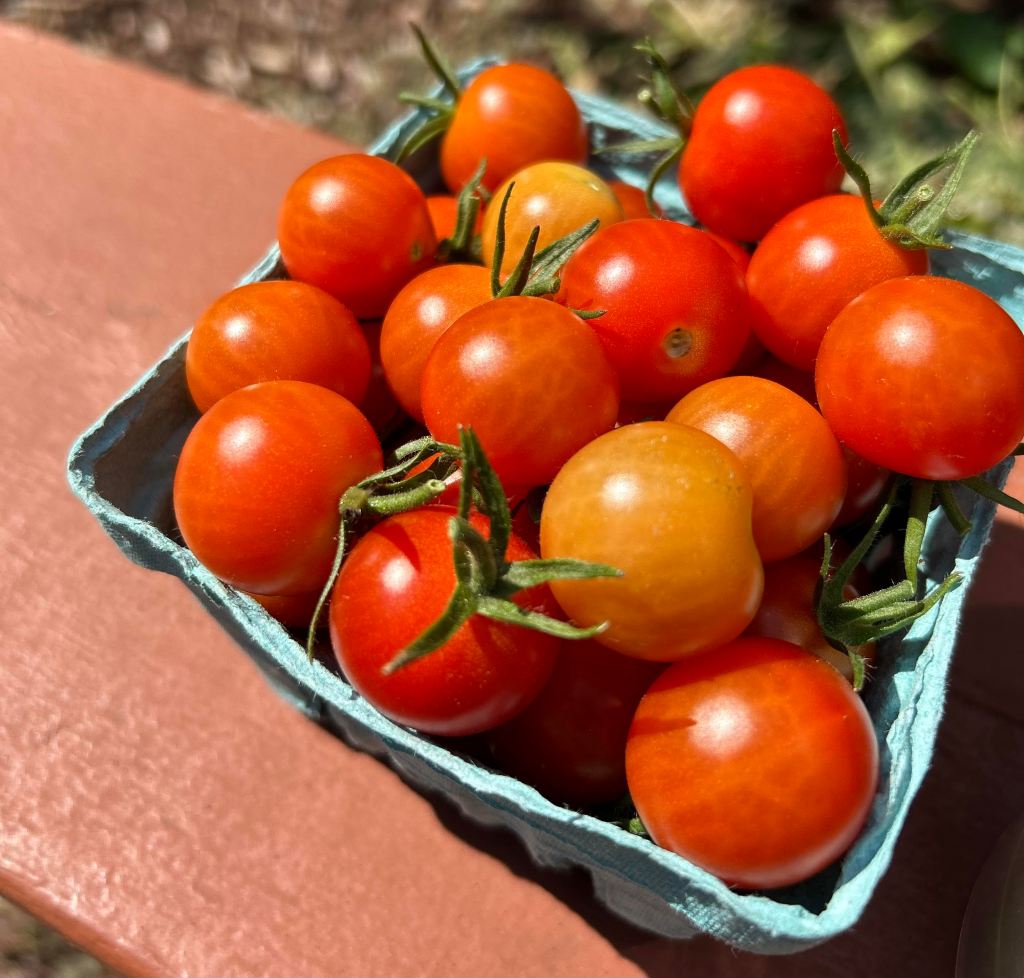
My prayer is for class consciousness. What if our tax dollars went to funding universal healthcare, but we held corporations accountable for paying livable wages so everyone still had enough to take care of their needs? When a single tomato can contain 100-300 seeds, we realize that there are never too many people to take care of – documented or not. The systems we create matter, but we can create new ones even if we start making them with our neighbors.
My prayer is also that we make room for silence in the midst of all the noise. Western culture has taught us to avoid silence so practicing it can feel deeply uncomfortable. Yet like anything else, it’s important to find balance. With so much noise it can be easy to forget how deeply connected we all actually are.
When I gaze at the beautiful wildflowers, the vastness of a starry sky, or other expressions of creations’ majesty, I find myself drifting into silence organically. Creation has a way of helping us remember the importance of pausing and stepping into wonder. This wonder contains whispers from the Divine, not in a way that needs to hear a voice, but allows us to sense a presence beyond ourselves that connects all of creation. I think deep down we know we are all connected and we can feel that connection in the depths of our hearts. I think silence moves that awareness upward to the forefront of our consciousness and creates ongoing shifts in the way we see and move through the world. I am reminded of Thomas Keating’s quote, “Silence is God’s first language; everything else is a poor translation.”
True freedom isn’t isolation. True freedom is knowing we belong to one another. It’s the courage to ask for help and the grace to give it. It’s the ability to rest in the arms of someone else, to be nourished by what we didn’t earn, and to extend that same nourishment to others. That’s the kind of independence I want to celebrate.
For I was hungry and you gave me food, I was thirsty and you gave me drink, a stranger and you welcomed me,
naked and you clothed me, ill and you cared for me, in prison and you visited me.’
Then the righteous* will answer him and say, ‘Lord, when did we see you hungry and feed you, or thirsty and give you drink?
When did we see you a stranger and welcome you, or naked and clothe you?
When did we see you ill or in prison, and visit you?’
And the king will say to them in reply, ‘Amen, I say to you, whatever you did for one of these least brothers of mine, you did for me.’
– Matthew 25:35-40

 nichole marie
Leave a comment